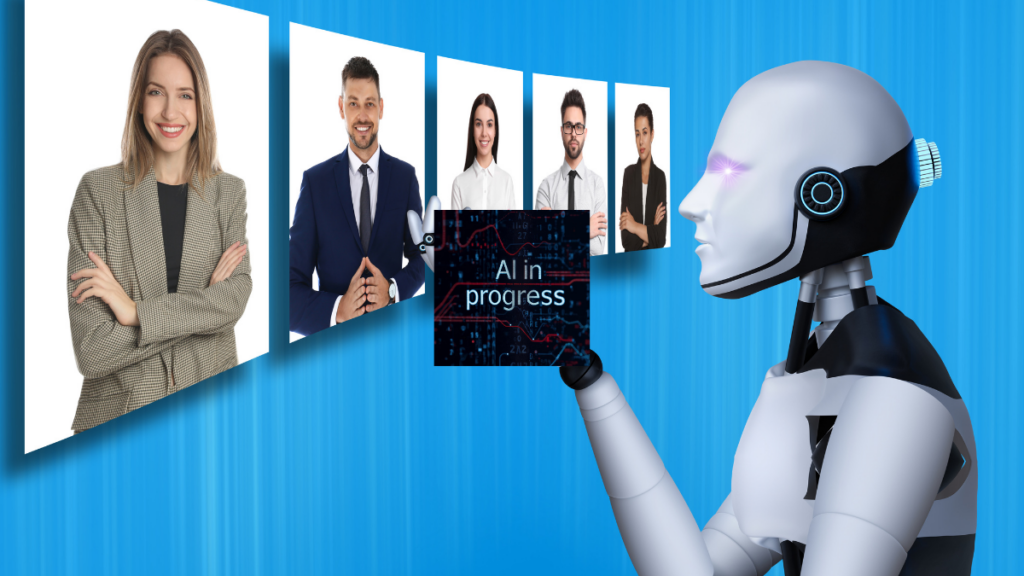
Most Canadian organizations are still working out what AI means for them.
In many cases, it remains something to be evaluated rather than fully embedded in how work gets done. Conversations tend to focus on timing, cost, and whether adoption is necessary at all. For some, it still feels early.
At the same time, a different pattern is already taking shape, and it is not happening evenly across the organization.
Inside HR, adoption has moved ahead more quickly, often in ways that feel practical rather than strategic. Tools get introduced to help manage volume, improve responsiveness, or make routine work more efficient. On their own, these decisions make sense. Taken together, they begin to shift how decisions are made in one of the most sensitive parts of the organization.
That difference in pace is where some of the more difficult questions begin to surface.
AI use at work is growing faster than employer policy in Canada
Across Canadian workplaces, AI use is no longer theoretical.
Studies from IBM and KPMG suggest that roughly half of Canadians are already using AI tools on the job, even in organizations without formal policies, as “shadow AI” becomes part of everyday work. In many cases, this shows up quietly. A chatbot drafts a response, a writing assistant refines a document, or a system helps structure thinking. The tools become part of the workflow before they are formally acknowledged.
At the same time, Statistics Canada data show that only about 15 percent of businesses plan to adopt AI in the near term, while many are not considering it or remain unsure. Research from the Business Data Lab and LMIC points in the same direction. Canada is not moving at a consistent pace, and adoption remains concentrated in a small number of sectors.
This gap between individual adoption and organizational response is not unusual. Employees tend to use tools that help them work more effectively. Organizations tend to move more cautiously, especially when the implications are not fully understood.
What is different here is how quickly AI becomes embedded in everyday work before there is a clear view of where it is being used or how it is shaping outcomes.
Why AI in HR in Canada is where legal risk concentrates
Within that broader pattern, HR stands out.
A Growclass and Angus Reid survey, reported by HRD Canada, found that about 81 percent of Canadian HR professionals are already using AI tools. That is one of the highest adoption rates across any function. HR teams manage high volumes of repetitive and time-sensitive work, from recruiting and screening to employee support and documentation. These are areas where automation has an immediate impact.
As a result, AI in HR in Canada is already present across sourcing platforms, resume screening tools, chat-based systems, and candidate assessments. Most of these tools are introduced through vendors, often as part of existing systems rather than a coordinated approach across HR, legal, and IT.
The benefit is clear. Processes move faster, and work becomes more consistent. Less visible is how these systems influence decisions.
A resume screening tool, for example, may improve efficiency by prioritizing candidates based on specific keywords. At the same time, it may exclude qualified applicants whose experience is described differently than what the system is designed to detect. Over time, effects like this can shape the composition of candidate pools in ways that are difficult to detect.
Observations from employment and labour law firms, the Ontario Human Rights Commission, and Canadian privacy experts tend to point to the same underlying issue. Many organizations do not have a clear view of where AI is being used in their people processes, how these systems function, or whether they have been evaluated for bias, accuracy, or compliance.
The tools are in place, but the visibility is often incomplete.
In practice, AI in HR in Canada creates legal risk when automated tools influence hiring or employment decisions without a clear understanding of how those decisions are made, what data is used, or whether those outcomes can be explained if challenged.
The legal framework for AI hiring risk in Canada has not changed
The legal framework surrounding employment decisions in Canada has not shifted in response to these tools.
The Ontario Human Rights Code, privacy obligations, and employment standards still apply. If a hiring or promotion decision results in a discriminatory outcome, responsibility rests with the employer. That remains true whether the decision is made by an individual or influenced by an algorithm within an applicant tracking system.
Vendors do not absorb that accountability.
What changes with AI hiring is not the rule, but the mechanism. Decisions are increasingly shaped by systems that are not always well understood or easy to explain. When that is the case, issues can remain unnoticed for longer. Risk does not disappear. It becomes less visible until something brings it forward.
Ontario’s AI hiring disclosure law (2026) changes visibility
In Ontario, that visibility is about to increase.
Beginning January 1, 2026, employers with 25 or more employees will be required to disclose whether AI is used in publicly advertised job postings and application forms when it plays a role in screening, assessment, or selection. This requirement, introduced under the Working for Workers Four Act, 2023, has been highlighted by employment law firms such as Osler as applying broadly.
On its own, the change is simple. A single line noting that AI is part of the hiring process.
In practice, it alters the dynamic. Applicants will know that automated systems are involved, and over time those disclosures create a record. It becomes easier to connect outcomes to specific processes, and easier to ask questions about how those processes work.
The legal framework has always existed. What has been less accessible is the ability to see where it applies. That begins to change once disclosure becomes standard.
How legal risk around AI hiring in Canada is emerging
There is often an assumption that legal attention lags behind new technology. In many cases, it does, but usually only for a period of time.
Developments in the United States offer a useful signal. The ongoing Workday case, involving allegations of bias in AI-driven hiring tools, has raised questions about how automated screening systems influence outcomes.
Workday is not an edge case. It is a widely used enterprise platform with significant compliance and legal resources supporting its products.
The relevance is not in the specifics of the case alone, but in the pattern it reflects. When systems begin to shape employment decisions at scale, questions of accountability tend to follow.
Canadian legal commentators have been consistent on this point. Lower litigation rates do not necessarily mean lower risk. They often reflect a delay between adoption and scrutiny. As AI hiring becomes more visible in Canada, and as disclosure requirements make its use explicit, that delay may begin to shorten.
A shift that is already underway
Some organizations are beginning to look at this more closely, not by stepping away from AI, but by developing a clearer understanding of how it is being used.
They are mapping where AI tools sit across HR processes, asking vendors more detailed questions, and involving legal, IT, and privacy functions earlier in decision-making. They tend to distinguish between lower-impact uses and higher-impact decisions such as hiring or promotion, where scrutiny is greater.
None of this removes uncertainty. It does, however, reduce how much remains unseen.
Much of the broader conversation around AI still focuses on strategy. Inside organizations, the shift is happening through smaller decisions. A tool introduced to improve screening. A feature enabled within an existing system. A team finding a more efficient way to manage workload.
Each step makes sense on its own. Taken together, they begin to reshape how decisions are made.
In many organizations, that shift is already underway.
The question is no longer whether AI is part of HR processes. It is how clearly its role is understood, and how easily that role can be explained when someone asks.
For many, that answer is still taking shape.