However, HR departments are already deeply engaged—and that creates challenges.
Why HR’s rapid AI adoption is creating unseen legal risk in Canada — and what leaders must fix before new disclosure rules arrive in 2026.
Most Canadian companies are not fully committed to AI. However, HR departments are already deeply engaged, and that creates challenges. Employees are adopting AI faster than employers can create guidelines. HR teams are bringing in tools that may introduce legal risks, often using systems they cannot fully explain, yet remain responsible for. This isn’t genuine innovation; it’s an emerging, unnoticed risk.
Workers Are Outpacing Policy
About half of Canadians are now using AI tools on the job, and that number keeps growing as “shadow AI” quietly makes its way into offices. Recent studies by IBM and KPMG show that adoption is accelerating, even in workplaces without formal policies. Most employees have already played around with generative AI, whether that’s a chatbot, a writing tool, or a code assistant, but many still don’t fully understand how these systems work or where their data goes. Still, they’re using them every day to think, write, and get things done.
The latest data from Statistics Canada highlights just how slow employers are to catch up. Barely 15% of businesses plan to use AI in the next year, while the majority aren’t even considering it, and a sizeable chunk simply don’t know. When you factor in studies from the Business Data Lab and LMIC, the story is obvious: Canada is not at the forefront of AI adoption. Most progress is happening in sectors like tech, professional services, and finance, while many traditional industries and smaller businesses are still holding back.
The contrast is clear. Employees are already integrating these technologies into their routines. Employers, however, often treat “AI investment” as simply purchasing software with added features, not as an opportunity to reconsider their processes, oversight, or risk controls.
HR: Where the Risk Is Concentrated
HR professionals are some of the fastest to adopt AI in Canadian workplaces. A recent Growclass/Angus Reid survey shared by HRD Canada found that about 81% of Canadian HR professionals use AI tools, the highest rate among the groups studied.
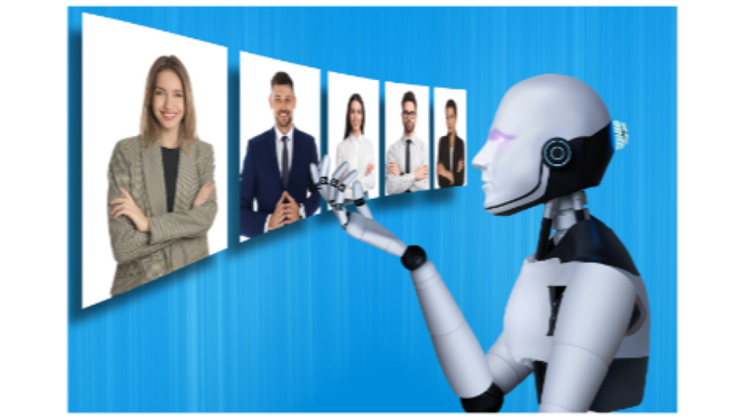
These tools are used in many places, such as sourcing platforms, resume screeners, chatbots that answer employee questions, and automated assessments. For example, a widely used resume screening tool may rely on algorithms to shortlist candidates based on keywords. The risk is that the system may filter out qualified applicants if their resumes don’t contain the exact terms being scanned, leading to a lack of diversity and unequal opportunities. Most are purchased from vendors rather than being part of a planned HR and legal strategy. Employment and labour law firms, the Ontario Human Rights Commission, and Canadian privacy experts have all pointed out the same issue: many organizations do not know exactly where AI is used in their hiring and people processes, how these systems work, or whether they have been tested for bias, accuracy, or compliance.
HR is not a testing ground where mistakes don’t matter. Every hiring, promotion, performance, and termination call sits under the Ontario Human Rights Code, privacy rules, and employment standards, whether leaders like it or not. The Ontario Human Rights Commission and employment lawyers have been blunt on this point: if there is discrimination in the outcome, the employer owns it – no matter if it came from a manager’s gut instinct or from an algorithm quietly scoring candidates inside your ATS. You do not get to hand that responsibility to a vendor just because their brochure calls the product “fair” or “objective.”
If your HR team uses an untested system for screening, ranking, or selection, you have not lowered your risk. Instead, you have created hidden problems. If you cannot explain where these systems are used, what data they use, and how you have checked them for fairness and compliance, you are not being innovative. You have a governance problem that will soon become much more obvious.
Consider these questions to assess whether you have a governance gap:
– Can you confidently identify every AI tool currently used within your HR processes?
– Do you have documentation showing the testing and validation of these AI tools for bias and accuracy?
– Is there a structured oversight mechanism involving HR, legal, and IT teams in place to review AI systems regularly?
If you find gaps, act quickly. Bring HR, legal, IT, and leadership together to set clear rules for AI use and oversight. Early action helps avoid bigger risks. Work together to set some clear rules for how your AI tools are used and checked. When you fix these problems early, you stay ahead of risk and avoid bigger issues down the road.
Ontario Is About to Create a Paper Trail
Ontario is about to address this lack of visibility.
Starting January 1, 2026, any Ontario employer with 25 or more employees will be required to disclose in publicly advertised job postings and on application forms whether an AI system is used to screen, assess, or select applicants. This new obligation comes from the Working for Workers Four Act, 2023 (Bill 149), which amended the Employment Standards Act to require greater transparency regarding the use of AI in hiring. Employment law firms like Osler and others have been warning employers throughout late 2025 that this is not optional and applies to relatively small organizations as well as large enterprises. Additionally, efforts to expand similar transparency are underway in Quebec and at the federal level, suggesting a broader shift towards a national policy framework, indicating a growing trend across Canada to address AI’s role in employment processes.
One simple line changes everything. The moment you add that sentence to a posting, every rejected applicant knows some kind of automation played a role. That gives them two things they rarely had before: clear proof that an AI tool was part of the process, and a specific posting and date to point to if they choose to bring a complaint or human rights claim.
Over time, those disclosures create a public record that makes it easier to spot patterns in who is being filtered out and to question whether the process is fair. The Ontario Human Rights Code, privacy rules, and existing employment law already cover discriminatory or arbitrary screening, including when done by automated systems. The only thing missing is visibility. Bill 149 starts to close that gap on January 1, 2026.
You Don’t Get to Pass the Blame
Some leaders are operating as if the law hasn’t caught up. It has, and that gap in awareness is now the risk.
Take the Workday case in the US. Derek Mobley, an African American man over 40 with a disability, says he applied to over 100 jobs at companies using Workday’s hiring tools and kept getting rejected, sometimes within minutes, even though he was qualified. He says the AI screening tools unfairly filtered him out because of his race, age, and disability. This is now a class-action lawsuit with significant implications.
Workday is not a fringe tool. It is a mainstream enterprise HR and applicant tracking platform, with compliance, engineering, and legal teams supporting its products. If an organization like that can be pulled into litigation over bias in screening, a 100‑person Ontario company running an off‑the‑shelf hiring add‑on with no meaningful testing, documentation, or oversight is not “too small to worry about.” It is simply unprepared.
Canada may be less litigious than the United States. Still, Canadian legal commentators are clear: fewer lawsuits do not mean less risk; they only mean a longer lag between harm and legal action. As AI tools become more common in HR, as Ontario forces employers to disclose where they use them, and as labour markets tighten, more candidates will have both the information and motivation to question and challenge screening decisions. The human rights and employment law framework is already in place. The only thing changing is how easy it will be to see what you are doing.
What Responsible Employers Should Be Doing Now
This is not a call to abandon new tools. It is a call to stop using them on autopilot.
Responsible employers can start with a few basics:
- Map your ecosystem. Work with HR, IT, and your vendors to identify where AI or automated systems are used in people processes, sourcing, screening, assessments, internal mobility, performance management, and exits. Canadian regulators and human-rights bodies consistently stress that if you cannot map it, you cannot manage or justify it.
- Demand explainability. Do not use systems you cannot explain for high‑impact decisions like screening and selection. Ask vendors for documentation on how the tool was designed, what data it uses, how it was tested for bias and accuracy, and what monitoring is in place. Canadian AI and human-rights guidance increasingly emphasize explainability and auditability, especially in employment.
- Prioritize governance. Treat AI in HR as a human‑rights and compliance issue first, and an efficiency play second. Leading Canadian law firms and the Ontario Human Rights Commission recommend cross‑functional oversight comprised of HR, legal, privacy, IT, and business leaders before these tools are deployed in live hiring or promotion decisions.
- Keep humans involved. Use AI where the risk is lower, and the value is obvious: drafting interview guides, summarizing notes, preparing documentation, or generating ideas. Make sure qualified people remain accountable for actual hiring, promotion, and termination decisions, and that they are trained on how to interpret and, when necessary, override automated outputs.
- Prepare your disclosure. If you are in Ontario and using AI in hiring, now is the time to draft the language for job postings and application forms that will take effect on January 1, 2026. Employment law guidance recommends making sure that what you write is accurate, that you know which systems the disclosure refers to, and that someone on your team can answer candidate questions about what the tool does and how it fits into the process.
The real risk in Canadian organizations is not “AI” as a buzzword. It is untested, poorly understood systems quietly running inside HR, bought on vendor promises, and fully covered by laws that will hold employers – not their software – responsible when something goes wrong. Don’t wait for your first complaint or investigation to be the moment you discover how these systems really work.